2025.03.01

Deputy Director Yueh-Ping Yang Shares Views on Central Bank Digital Currency in Interview with Taiwan Banker

As central banks around the world actively explore Central Bank Digital Currencies (CBDCs), Taiwan has also launched in-depth discussions on the potential introduction of a “digital New Taiwan dollar.” Deputy Director Yueh-Ping Yang was interviewed by Taiwan Banker magazine, where he provided an in-depth analysis of the legal and policy implications of CBDC implementation in Taiwan, as well as the potential challenges and regulatory measures it entails.


Deputy Director Yueh-Ping Yang first emphasized that the development of CBDCs is not merely a technological upgrade, but rather a profound reconstruction of legal and policy frameworks. Under the currently prevailing “two-tier architecture” of CBDCs, the roles and relationships between central banks, commercial banks, and the general public as CBDC holders will need to be redefined. In addition, regulatory adjustments will be required in three major areas: personal data protection, supervisory frameworks, and legal authorization.


Addressing privacy concerns—the most controversial aspect of CBDCs—Yang noted the inherent tension between anonymity and anti-money laundering (AML) measures. He explained that the key to mitigating privacy concerns lies in how intermediary institutions (such as banks or payment providers) within the two-tier framework manage transaction data. If intermediaries are required to transmit transaction data back to the central bank, the central bank would hold comprehensive CBDC transaction records, which raises surveillance concerns. Conversely, if no transaction data are transmitted, systemic resilience may be weakened, increasing operational risks.


Deputy Director Yueh-Ping Yang further highlighted that, within the two-tier system, questions regarding the status, regulation, and liability of intermediary institutions must be clarified before CBDC adoption. He also noted that whether the central bank should be empowered to revoke or freeze unlawful transactions under specific circumstances would require dedicated legislative support. Finally, he pointed out that cross-border payments and international regulatory cooperation will present additional challenges for CBDC implementation in the future.


For the full Taiwan Banker report, please refer to: https://service.tabf.org.tw/FBS/SinglePage/625337

 

2025.02.25

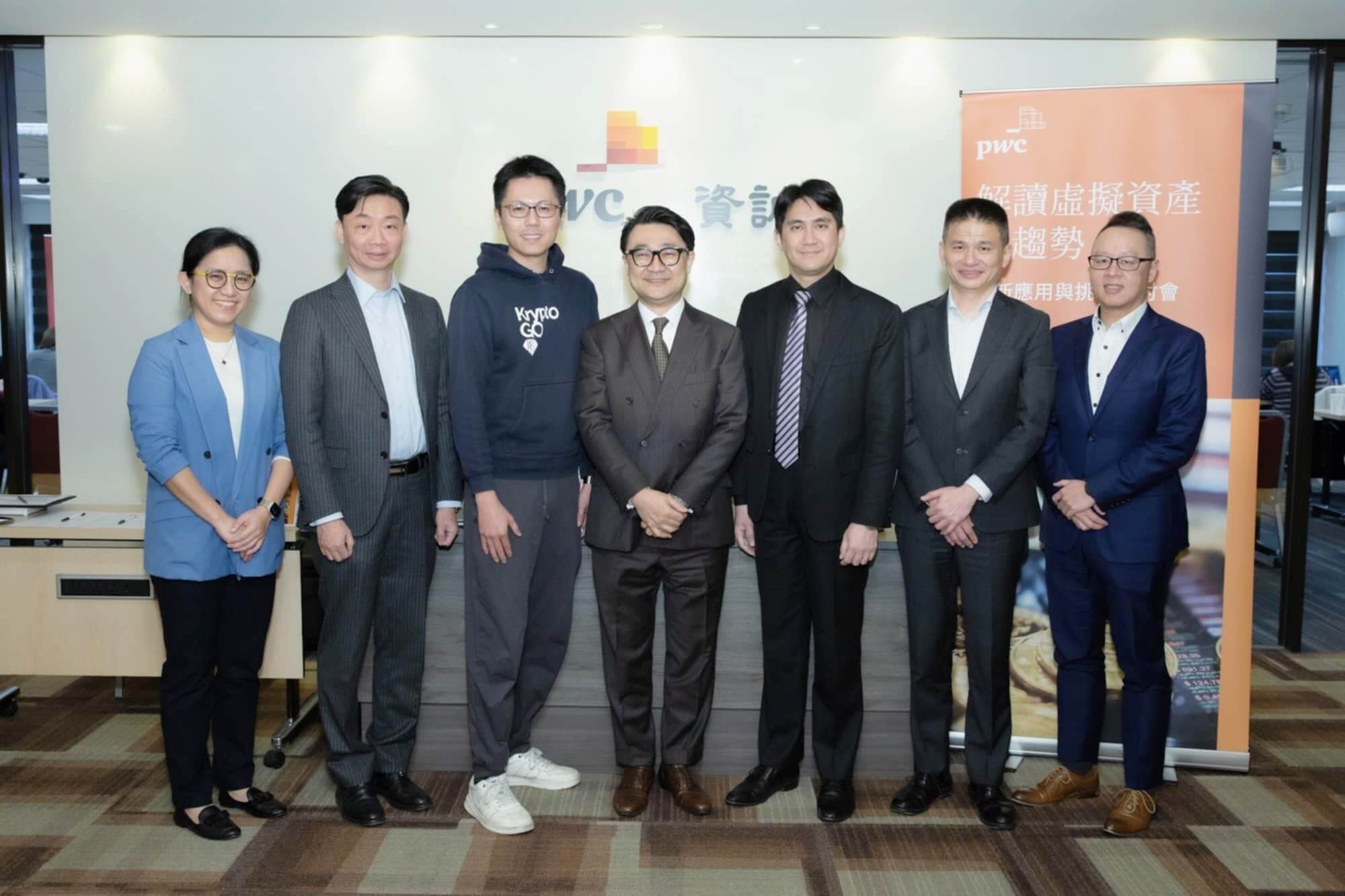
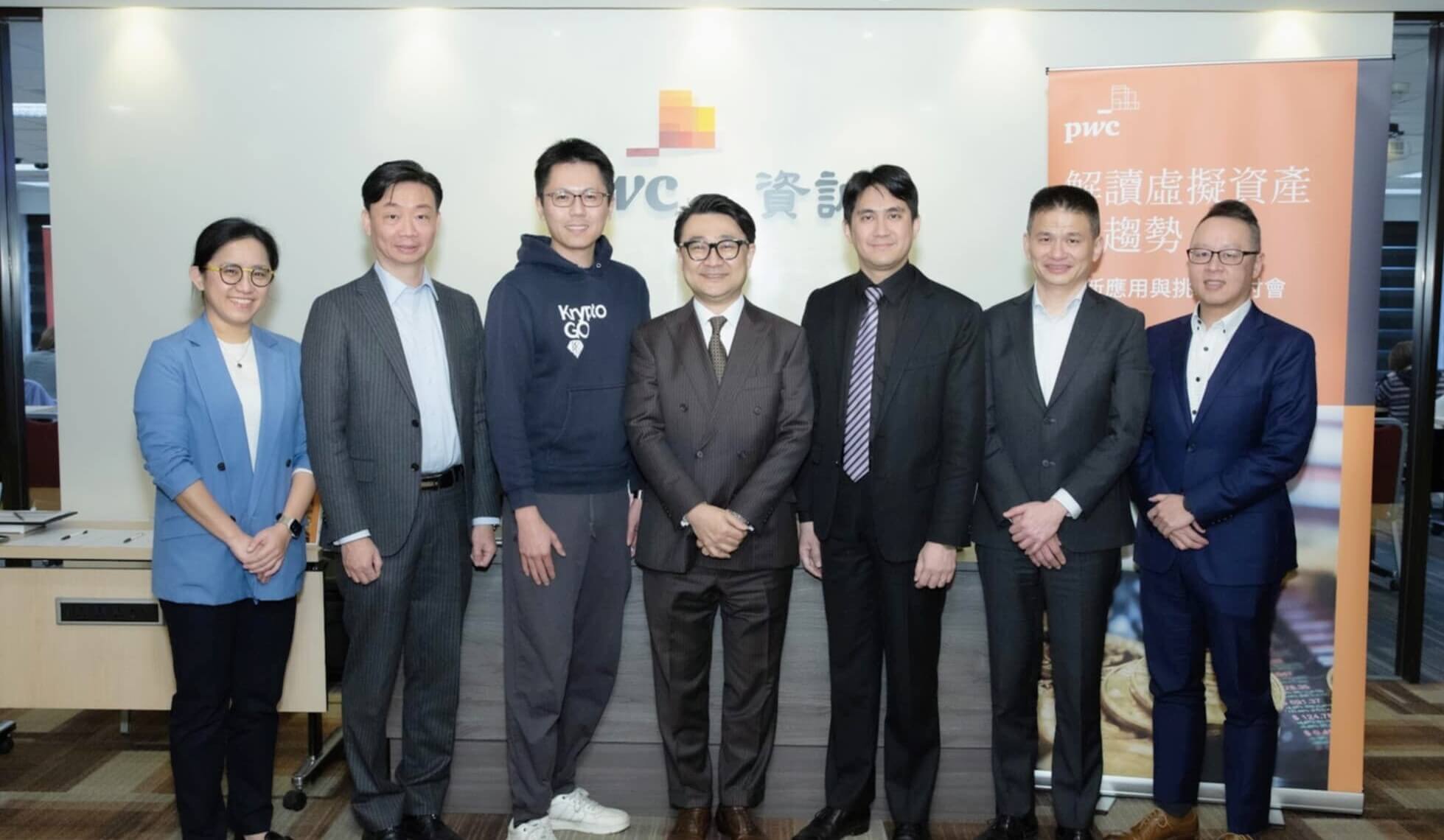
Deputy Director Yueh-Ping Yang Speaks on Virtual Asset Regulatory Trends at PwC Taiwan Seminar “Decoding New Trends in Virtual Assets”

On February 25, 2025, PwC Taiwan hosted the seminar “Decoding New Trends in Virtual Assets: Innovation, Applications, and Challenges.” The event focused on the latest developments in virtual assets, their innovative applications, and related regulatory issues.


Speakers included Richard Watanabe, COO of Financial Services at PwC Taiwan; Kordan Ou, CEO of KryptoGO; Attorney Yu-Hsun Lee, Partner at PwC Legal; and PwC Taiwan accountants Shang-Tun Wu and Yu-Chen Hu. They shared insights on the opportunities and challenges of virtual assets from financial, legal, accounting, and industry perspectives, while also discussing how to strike a balance between regulation and innovation to promote a stable and healthy market.


Deputy Director Yueh-Ping Yang of CIEL was also invited to the seminar to share his views on emerging trends in virtual asset regulation. He introduced the core framework of Taiwan’s current registration system for Virtual Asset Service Providers (VASPs) and elaborated on the forthcoming Virtual Asset Service Act draft bill. He highlighted its key regulatory features and the ways in which it represents a significant advancement beyond the existing registration regime.


For more details, please refer to PwC Taiwan’s coverage of the seminar: https://www.pwc.tw/zh/news/press-release/press-20250226-1.html

2025.02.13

Associate Director Yueh-Ping Yang Attends FSC Seminar on the Draft Virtual Asset Service Act to Explain Legislative Background

On February 13, 2025, Professor Yueh-Ping Yang, Associate Director of our Center, was invited to attend the Seminar on the Draft Virtual Asset Service Act organized by the Financial Supervisory Commission (FSC). As a representative of the FSC-commissioned research team, Professor Yang assisted in explaining the legislative background and the drafting process of the bill.

.

In January 2024, the FSC commissioned the research team to explore the feasibility of enacting a specialized law for virtual asset regulation. After continuous consultation with the research team, and by taking into account both comparative experiences from foreign jurisdictions and the practical needs of Taiwan’s industry, the FSC completed the draft of the Virtual Asset Service Act.

.

During the seminar, the FSC first provided a brief overview of the development of Taiwan’s virtual asset regulatory framework and relevant international trends, before engaging with stakeholders on key aspects of the draft. Discussion topics included stablecoin issuance, regulatory requirements for service providers (such as newly defined categories of virtual asset services, licensing systems, capital requirements, business guarantees, and personnel qualifications).

.

For the FSC’s official press release, please refer to:https://www.fsc.gov.tw/ch/home.jsp?id=96&parentpath=0,2&mcustomize=news_view.jsp&dataserno=202502130003&dtable=News

2025.02.07

Deputy Director Yueh-Ping Yang Invited to Lecture on “FinTech’s Challenges to Financial Regulation” at Waseda University’s Transnational Program

From February 4 to 7, 2025, Deputy Director Professor Yueh-Ping Yang of our Center was invited to participate in the Transnational Program organized by the Faculty of Law, Waseda University. He delivered a lecture titled “FinTech’s Challenges to Financial Regulation: An Accountability Perspective” to the participants of the program.


The Transnational Program is a long-standing international short-term course hosted annually by Waseda University’s Faculty of Law. The 2025 program focused on the theme of financial technology (FinTech) and was jointly organized by Professor Shuichi Furuya, Director of the Graduate School of Law at Waseda University, and Professor Atsushi Koide. Participants included faculty members and students from National Taiwan University (Taiwan), Seoul National University (Korea), Queen Mary University of London (United Kingdom), Bucerius Law School in Hamburg (Germany), and Waseda University (Japan). The program featured lectures and student group presentations on various FinTech-related issues.


In his lecture, Deputy Director Yueh-Ping Yang highlighted how the emergence of FinTech—characterized by the cross-border nature of the internet, the decentralization of blockchain, and the automation of artificial intelligence—has diluted and restructured the traditional “regulatory intermediaries” upon which financial supervision has long relied. This transformation poses significant challenges to conventional accountability frameworks in financial regulation.


Deputy Director Yang further proposed several potential directions for regulatory adaptation. These include: (1) direct regulation of FinTech providers, (2) indirect regulation of FinTech providers through traditional financial institutions, and (3) technical regulation conducted in cooperation with non-financial regulatory authorities.

2025.01.31

Deputy Director Chao-Hung Chen Publishes Research on “Corporate Compliance Systems and the Governance Responsibilities of the Board of Directors” in the Taiwan Law Review of Financial and Economic Law

Deputy Director Professor Chao-Hung Chen of CIEL has published a paper in the Taiwan Law Review of Financial and Economic Law, titled “Corporate Compliance Systems and the Governance Responsibilities of the Board of Directors.”


This research approaches the topic from the perspective of corporate governance, illustrating how the establishment of institutionalized preventive and supervisory mechanisms enables both management and employees to ensure compliance with the law—an increasingly crucial aspect of modern corporate responsibility. In Taiwan, the current framework primarily targets publicly listed companies through mechanisms such as internal control systems, internal and external auditing, disclosure obligations, as well as the legal responsibilities of boards of directors and managers. Together, these measures create multiple lines of defense aimed at strengthening corporate compliance culture and reducing legal risks.


In the article, Deputy Director Chen also cautions that despite the formal soundness of the legal framework, practical implementation still faces challenges. For instance, internal control statements are often overly formalistic and lack substantive information, making it difficult for investors or the public to accurately assess a company’s true compliance status. While the imposition of director liability may serve as a deterrent, it remains uncertain whether it sufficiently motivates directors to actively fulfill their supervisory duties. Likewise, the role and responsibilities of managers within the compliance framework warrant ongoing examination. Moreover, if the legal framework merely remains at the level of documentation, its protective function may be severely limited. Beyond listed companies, Taiwan also has hundreds of thousands of non-listed corporations and limited liability companies, whose operations equally implicate public safety and the broader social interest.


Deputy Director Chen concludes that compliance is the cornerstone of corporate governance and the most fundamental requirement of corporate social responsibility. Looking ahead, not only should the effectiveness of the existin the legal framework be continuously reviewed, but greater attention must also be given to the compliance practices of non-listed companies in order to prevent the legal framework from becoming a mere formality.


The full paper is available for download at the following link:
https://lawdata.com.tw/tw/detail.aspx?no=533537


2025.01.31

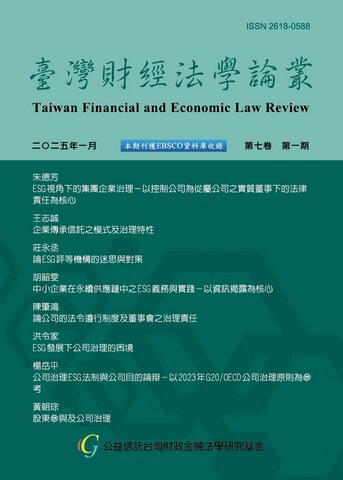
Associate Director Yueh-Ping Yang Publishes Study in Taiwan Financial and Economic Law Review on ESG Regulations in Corporate Governance and the Corporate Purpose Debate

Professor Yueh-Ping Yang, Associate Director of our Center, has published a paper in the Taiwan Financial and Economic Law Review entitled ESG Regulations in Corporate Governance and the Corporate Purpose Debate: Utilizing the 2023 G20/OECD Corporate Governance Principles as a Reference.

.

This article reviews the recent development of ESG-related regulations in Taiwan’s corporate governance framework and examines the theoretical debate on corporate purpose underlying these reforms. It engages with the legislative and judicial tendencies in Taiwan, which lean toward a stakeholder-oriented approach, and draws on international literature to introduce concepts such as the “heuristic shareholder value theory” and the “pragmatic view of corporate purpose.” By incorporating the perspectives reflected in the 2023 G20/OECD Corporate Governance Principles, the study identifies possible directions for the future development of ESG regulations in Taiwan’s corporate governance.

.

The paper recommends that future reforms focus on strengthening internal corporate controls, particularly ESG risk management, as well as regulating external gatekeepers such as ESG rating agencies. At the same time, the legal framework should balance two dimensions: on the one hand, allowing companies discretion to shape their own corporate purpose and concentrate on specific ESG issues; and on the other hand, enhancing the clarity and enforceability of ESG disclosure requirements to ensure effective implementation.

.

The full article is available at:https://lawdata.com.tw/tw/detail.aspx?no=533539

2025.01.31

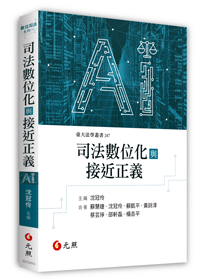
Associate Director Yueh-Ping Yang Publishes Study in Judicial Digitalization and Access to Justice on Crowd Wisdom in Smart Contract Dispute Resolution

Professor Yueh-Ping Yang, Associate Director of our Center, has published a paper in the edited volume Judicial Digitalization and Access to Justice, entitled Crowd Wisdom in Smart Contract Dispute Resolution: Can Crowdsourced Dispute Resolution Be Considered Arbitration?

.

This study focuses on Smart Contract Dispute Resolution (SCDR), particularly the model of Crowdsourced Dispute Resolution (CDR). Such mechanisms integrate crowd participation with blockchain technology in an attempt to address disputes arising from smart contracts in a decentralized and expeditious manner.

.

In his research, Professor Yang highlights that although these mechanisms demonstrate a high degree of innovation, they raise unresolved issues regarding legal classification, professional expertise, procedural fairness, and enforceability. By comparing the similarities and differences between traditional arbitration and SCDR, and reflecting on the essential elements of an “arbitration” system, Professor Yang argues that whether current SCDR mechanisms can legally be recognized as arbitration remains debatable. He further suggests that to be considered a true arbitration system, SCDR would need to strengthen its procedural safeguards.

.

For publication details, please refer to:https://www.angle.com.tw/book.asp?BKID=17543

2025.01.21

Associate Director Chao-Hung Chen Publishes Study in A Research Agenda for Financial Law and Regulation on Regulation of Payment Systems from the Perspectives of Consumer Protection and Fraud Prevention

Professor Chao-Hung Chen, Associate Director of our Center, has contributed a chapter to the edited volume A Research Agenda for Financial Law and Regulation, entitled Regulation of Payment Systems from the Perspectives of Consumer Protection and Fraud Prevention.

.

This chapter analyzes the regulatory frameworks of Singapore, Hong Kong, and Taiwan from the perspectives of consumer protection and fraud prevention, examining the obligations of Payment Services Providers (PSPs) under contractual arrangements and regulatory requirements. The study argues that private contractual law alone is insufficient to effectively regulate PSPs’ standards of conduct. Instead, a degree of regulatory intervention, supplemented by contractual terms, is necessary to provide more comprehensive protection. The chapter further compares the three jurisdictions in terms of payment processing efficiency, client fund protection mechanisms (such as trusts, deposits, and minimum capital requirements), and fraud risk management, highlighting the crucial role of regulatory policies in building a secure payment environment.

.

For publication details, please refer to:https://www.elgaronline.com/edcollchap-oa/book/9781803929996/chapter11.xml


2025.01.10

Deputy Director Yueh-Ping Yang Presents Paper on “Smart Contract Laws in Taiwan” at the Asia-Pacific Contract Law Symposium, The University of Hong Kong

Deputy Director Yueh-Ping Yang of CIEL was invited to participate in the Asia-Pacific Contract Law Symposium held at the University of Hong Kong on January 9–10, 2025. At the symposium, he presented his research paper titled “Smart Contract Laws in Taiwan: Constant in a Changing World.”


The symposium, organized by Professor Lusina Ho of the Faculty of Law, The University of Hong Kong, was themed “The Digital World in Context.” It brought together contract law scholars from across Asia—including Japan, Singapore, Australia, New Zealand, China, Hong Kong, Macau, Thailand, Malaysia, Vietnam, Indonesia, India, and Bangladesh—to explore new issues in private contract law arising in the digital era.


n his paper “Smart Contract Laws in Taiwan: Constant in a Changing World,” Deputy Director Yueh-Ping Yang examined both substantive and procedural legal issues concerning smart contracts under Taiwanese law. His discussion addressed the potential legal classification, validity, interpretation, effects of breach, and dispute resolution mechanisms of smart contracts in Taiwan.


This symposium not only focused on the new challenges of contract law in the digital era but also highlighted CIEL’s forward-looking perspective in research on smart contracts and private law. Through Deputy Director Yang’s presentation and exchange, CIEL not only shared Taiwan’s experiences but also actively engaged in regional legal dialogue, strengthening Taiwan’s presence within the international academic network. Moving forward, CIEL will continue to build on its research foundation, deepen cross-border collaboration, and promote legal innovation on the global stage.


2025.01.08

Associate Director Chao-Hung Chen Publishes Study in the Asian Journal of Law and Economics on Current Status and Development of Economic Analysis in Corporate Law and Securities Regulations in Taiwan

Professor Chao-Hung Chen, Associate Director of our Center, has published his latest research, Current Status and Development of Economic Analysis in Corporate Law and Securities Regulations in Taiwan, in the Asian Journal of Law and Economics.

.

The article reviews the development of economic analysis methods in Taiwan since their introduction in the 1990s, with a particular focus on their application in the fields of corporate law and securities regulation. The study notes that while explicit research in this area has gradually declined since 2006, the core concepts of economics have continued to exert an implicit influence on legal scholarship in Taiwan and have become an integral part of legal academia.

.

For publication details, please refer to: https://www.degruyterbrill.com/document/doi/10.1515/ajle-2024-2005/html

 
scroll_fix_img_mobile