2025.12.15

Events

2025 Enterprise Law Innovation Salon|Highlights of Sessions II & III

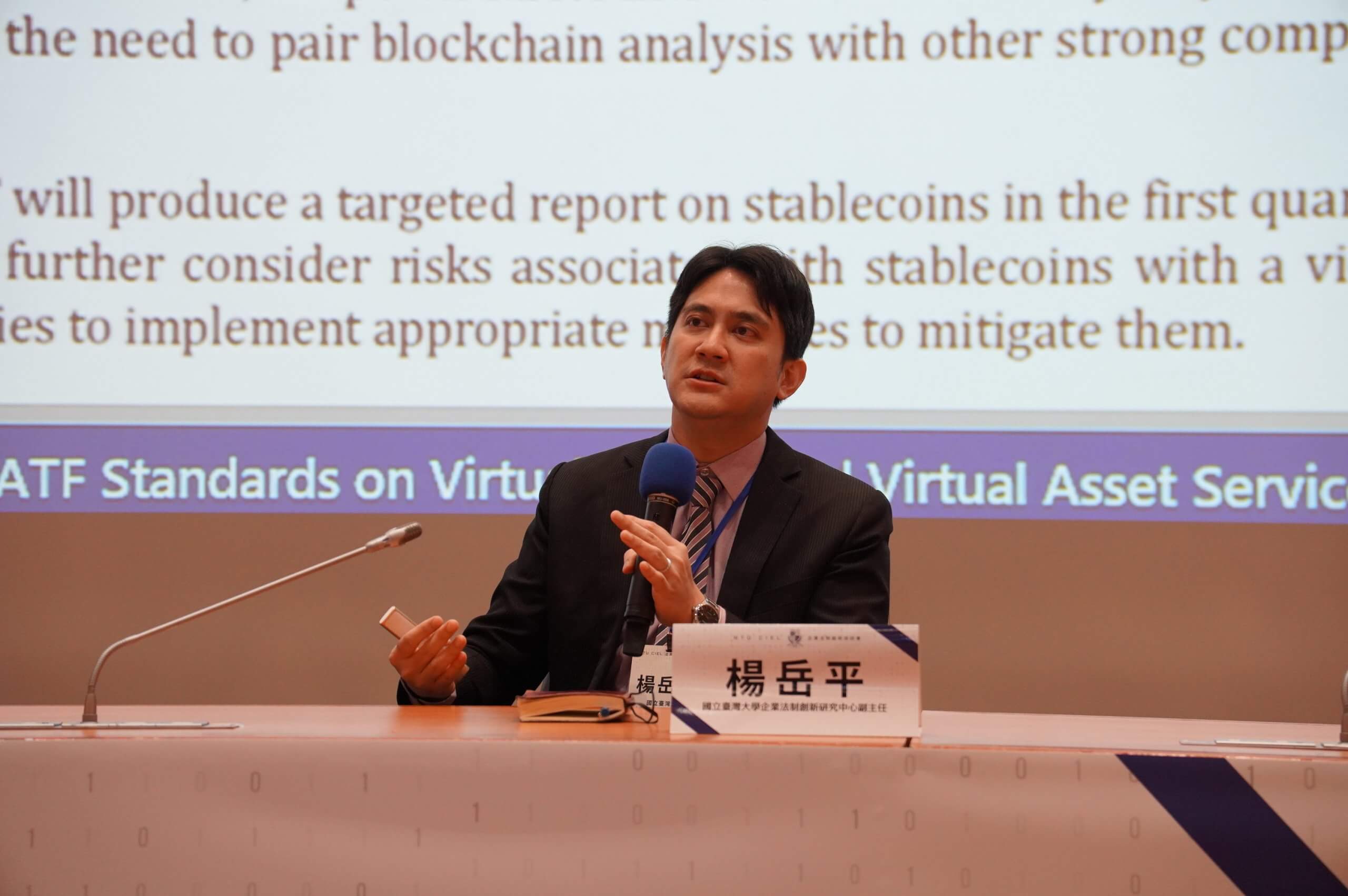
The second session, titled “Infrastructure Development and Regulatory Challenges of Emerging Payment Instruments,” was moderated by Deputy Director Chao-Hung Chen of CIEL. The panel featured Kuo-Liang Lin, Chairperson of the Financial Information Service Co.; Quincy Chen, Chief Digital Officer of Cathay United Bank; and Darren Wang, Founder of the OwlTing Group. Drawing on perspectives from financial market infrastructure, banking practice, and startup experience, the panel examined the institutional challenges and future possibilities arising from innovations in payment systems.


Founder Wang shared his experience with cross-border stablecoin applications, noting that while stablecoins offer clear advantages in improving the efficiency and immediacy of cross-border remittances, significant challenges remain, including compliance procedures, anti-money laundering (AML) requirements, cross-chain settlement, and fiat currency conversion. Chairperson Lin observed from a financial infrastructure perspective that the evolution of payment instruments is fundamentally a process of continuous digitalization, and that the potential of stablecoins to enhance settlement speed and efficiency represents a trend that existing systems must directly address. From a banking perspective, CDO Chen emphasized that customers place the highest priority on immediacy, stability, and uninterrupted service—particularly in corporate and cross-border financial contexts. While blockchain and stablecoins offer efficiency gains, he noted that their adoption must proceed cautiously within sound risk management and compliance frameworks.


The third session, titled “Infrastructure Development and Regulatory Challenges of AI in Finance,” was moderated by Chief Executive Officer Chung-Chia Huang of CIEL. The panel featured Yi-Chun Shih, Deputy Director of the Department of Development and Innovation, Financial Supervisory Commission; Tzu-Hsiung Wang, Director at the Science and Technology Law Institute; and Shih-Ming Lo, Chief Compliance Officer at HSBC Taiwan. The discussion focused on the practical applications of artificial intelligence in finance, as well as the associated regulatory and institutional challenges.


During the discussion, CCO Lo noted that financial institutions currently rely primarily on machine learning, which is widely applied to internal process optimization, customer service and wealth management chatbots, as well as AML and fraud prevention. He emphasized that model explainability and continuous validation remain indispensable. Deputy Director Shih explained that AI is also being applied in areas such as credit analysis, underwriting and claims processing, and investment management. However, due to risks associated with generative AI—including hallucinations, inaccuracies, and personal data protection concerns—its current use is largely limited to internal support functions. Regulators have therefore adopted a guidance-first, risk-based supervisory approach. Director Wang highlighted that financial institutions’ heavy reliance on third-party suppliers for AI development may give rise to concentration and single-point-of-failure risks, underscoring the need for institutional design to balance outsourcing management with operational resilience.


Discussions in Sessions II and III concluded successfully, with each session focusing on two critical fintech themes—payment innovation and artificial intelligence—while showcasing diverse perspectives from government, industry, and academia on infrastructure development, regulatory flexibility, and risk governance. Building on the valuable insights shared by the panelists, CIEL will continue to advance its research efforts with the aim of contributing concretely to the future development of legal and regulatory frameworks.

2025.12.15

Events

2025 Enterprise Law Innovation Salon|Highlights of Session I

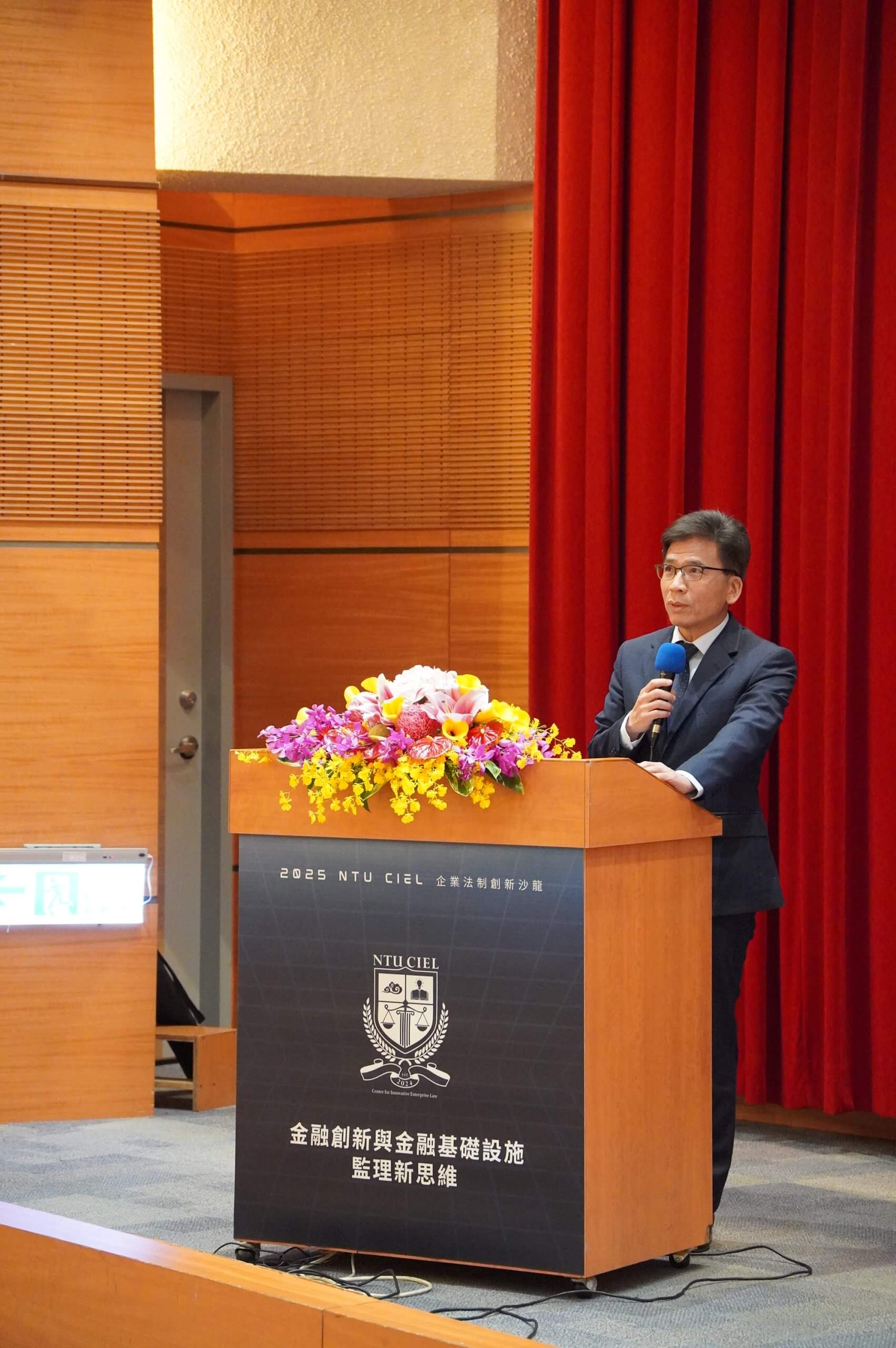
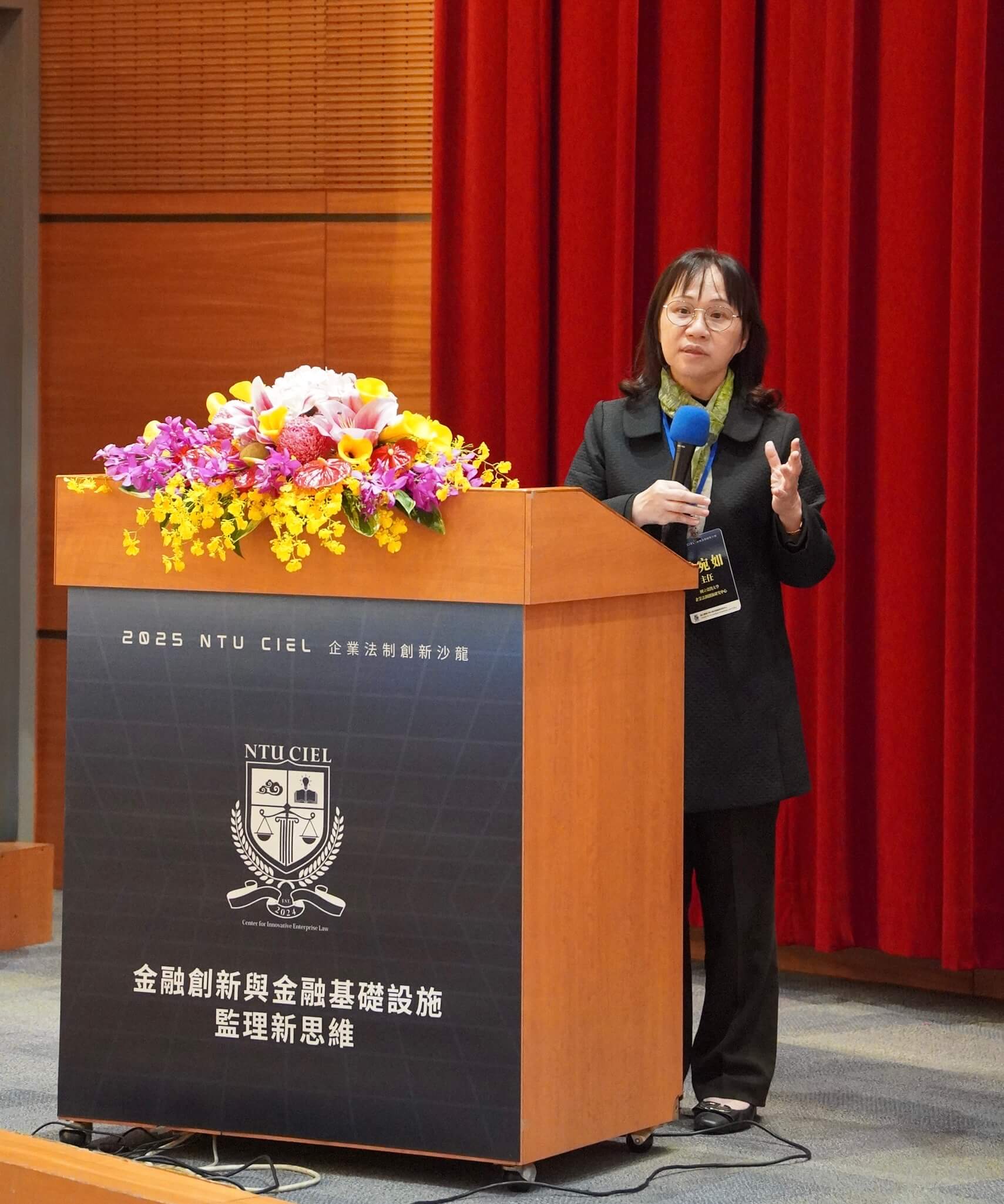
On December 15, 2025, CIEL hosted the 2025 Enterprise Law Innovation Salon, bringing together representatives from government, industry, and academia to engage in dialogue on key topics including real-world assets (RWA), cross-border payments, stablecoins, and artificial intelligence. The salon opened with welcoming remarks by Professor Wang-Ruu Tseng, Vice President of National Taiwan University and Director of CIEL. Professor Tseng emphasized that a central purpose of the salon was to shape the Center’s research agenda for the coming year through cross-sector exchange. She further expressed the expectation that financial regulatory authorities, in the course of policy formation, could draw on international practices by establishing advisory committees, issuing policy white papers, and conducting public consultations. Such mechanisms, she noted, would enable deeper regulatory research and facilitate open dialogue with industry, thereby enhancing the professionalism, transparency, and market responsiveness of regulatory frameworks.


The opening session continued with remarks by Chairperson Jin-Lung Peng of the Financial Supervisory Commission. Chairperson Peng affirmed the salon’s focus on the regulation of financial market infrastructure and shared the regulator’s overarching supervisory approach to real-world assets, emerging payment instruments, and artificial intelligence. He underscored the guiding principle of “neither rushing ahead nor falling behind,” under which pilot programs and institutional discussions should be advanced in a measured and orderly manner. Using a basketball analogy, Chairperson Peng illustrated the complex relationship between industry development and rule-making, observing that many fintech innovations require the prior establishment of legal frameworks and foundational institutions in order to develop smoothly. His remarks highlighted the critical importance of legal and institutional innovation. Chairperson Peng concluded by reaffirming the significance of CIEL’s establishment and recognizing the Center’s role and contributions in advancing research on financial regulation and innovation.


Following the remarks by the two distinguished guests, Session I of the salon formally commenced. The first session, titled “Infrastructure Development and Regulatory Challenges of Real-World Assets,” was moderated by Deputy Director Yang. The panel featured Zhong-Hao Huang, Deputy Director General of the Securities and Futures Bureau (SFB) ; Hui-Hua Pai, Director of Legal Affairs and Compliance at the Taiwan Depository and Clearing Corporation (TDCC); and Hung-Chih Chen, Project Manager at the Bank of Taiwan. The panel explored the development of RWA infrastructure and the associated practical challenges from regulatory, financial market infrastructure, and banking perspectives.


During the session, Deputy Director General Huang outlined the SFB’s regulatory planning for security-token RWA, addressing potential supervisory issues across various stages, including the legal characterization of property rights, issuance and reissuance, over-the-counter trading, custody, and settlement. He also provided a comparative assessment of different blockchain architectures and their respective advantages and limitations. Director Pai drew on the TDCC’s experimental work with security-token RWA to highlight potential civil law property issues, such as the applicability of enforcement, liquidation, and inheritance regimes to tokenized securities. She further explained the role that the TDCC could play in bridging on-chain and off-chain systems, enabling investors to access securities recorded under different ledger structures. Project Manager Chen shared insights from the Bank of Taiwan’s ongoing gold RWA project, illustrating the practical impact of RWA on clearing, settlement, and the optimization of financial market infrastructure, while also identifying emerging challenges related to competition from non-bank entities, personal data protection, anti-money laundering compliance, and asset exit mechanisms.


The discussion in Session I concluded successfully. Looking ahead, CIEL will continue to facilitate dialogue among academia, practitioners, and regulatory authorities through conferences and industry salons, providing an important foundation for future research and institutional development.

2025.11.21

Events

2025 Innovative Enterprise Law Seminar|Session Ⅱ Recap

The second session of the seminar was led by Professor Yueh-Ping Yang , Deputy Director of CIEL, with Professor Ying-Hsin Tsai as discussant. The session focuses on “Tokenization of Payment Instruments”. The seminar provided an in-depth analysis of the institutional framework, risks and future regulatory directions of payment tokenization from comparative perspectives.


Operation Models and Risks of Stablecoins
Professor Yang noted that stablecoins share many characteristics with tokenized forms of e-money. Using the distinction between primary and secondary markets, he explained the legal structure of stablecoins: while subscription and redemption in stablecoin’s primary market resemble e-money, stablecoin’s secondary-market circulation is beyond the offeror’s control and more depends on virtual asset service providers. As a result, stablecoin faces new risks in addition to that of e-money in areas such as AML compliance, ledger governance, and price de-pegging.


Global Regulatory Trends: Comparative Observations
Professor Yang further outlined global developments in stablecoin regulation. Jurisdictions such as Japan and Singapore regulate stablecoins under their payment laws, while the EU treats stablecoins as a form of e-money token. The United States, lacking a federal-level payment law, sometimes tend to conceptualize stablecoins as deposit-like products.


Japan’s Regulatory Design and Industry Strategy
Professor Tsai added that Japan pioneered a dedicated legal framework for stablecoins in 2022, placing it at the global forefront. Using JPYC’s yen-denominated stablecoin as an example, she explained that its reserve assets primarily consist of government bonds and cash. She also highlighted how Japanese banks are actively building tokenization infrastructure through the Progmat platform. Nonetheless, tokenization also introduces challenges for banks, including reduced fee income, more complex liquidity management, and diminished control over data.


Regulatory Directions in the Tokenization Era
Professor Tsai emphasized that regardless of stablecoins, deposit tokens, or CBDCs, the core of future payment instruments will remain in the hands of financial institutions and central banks. Payment tokenization compels regulatory frameworks to rethink functionality, risks, and responsibility allocation. As the system continues to evolve, cross-disciplinary collaboration and forward-looking planning will be crucial for Taiwan as it navigates global fintech transformation.


Amid the rapid evolution of global fintech, key questions persist: how can regulatory frameworks balance innovation and stability, and how should they address cross-border supervision challenges brought by new forms of payment instruments? CIEL will continue advancing research in these areas, striving to help shape a forward-looking and resilient legal framework for Taiwan.


2025.11.13

News

CIEL Deputy Director Prof. Yueh-Ping Yang Invited to Attend the 2025 International Forum on Virtual Asset Crimes Investigation and Cross-Border Cooperation

On November 13, 2025, CIEL Deputy Director Professor Yueh-Ping Yang was invited to attend the “International Forum on Virtual Asset Crimes Investigation and Cross-Border Cooperation,” hosted by the Anti-Money Laundering Office, Executive Yuan. The forum brought together expert representatives from domestic and international government agencies to engage in in-depth discussions on topics including tracking illicit virtual asset flows, combating online fraud, and strengthening cross-border cooperation.


Deputy Director Yang served as a panelist in the session titled “Stablecoins and Chinese Web: Money Laundering and Clearing Services between Digital Asset and FIAT.” The session featured keynote presentations by Mathieu H. L. and Simon Roch from FIU France. From legal and regulatory perspectives, Deputy Director Yang highlighted the following key points:


  • Traditional financial crime investigations have focused on monitoring money flows; however, in the era of digital finance, the boundary between money flows and data flows is increasingly blurred, calling for a rethinking of crime prevention strategies.
  • In virtual asset–related crimes, the key points for investigation may be shifting from unregulated OTCs to unregulated decentralized finance (DeFi).
  • Within DeFi ecosystems, SNS platforms, such as Telegram or Wechat, play a critical role in facilitating communication and coordination. Future criminal investigations should therefore extend beyond regulating financial intermediaries (e.g., VASPs) to also consider the role of digital platform service providers.


CIEL will continue to engage in international exchanges and work alongside government authorities and law enforcement agencies to advance the development of financial regulation and crime prevention frameworks for virtual assets.

2025.09.11

News

Deputy Director Yueh-Ping Yang was invited as a Speaker at the“IADI Core Principles International Conference”

In September 11, 2025, at the “IADI Core Principles International Conference” held in Taiwan by the International Association of Deposit Insurers (IADI).CIEL Deputy Director Professor Yueh-Ping Yang was invited to serve as a panelist, sharing on the topic of “The Impact of Digital Financial Innovation on the Deposit Insurance System.”


This session focused on whether emerging financial instruments such as electronic payments, stablecoins, and deposit tokens should be covered by deposit insurance. From an academic perspective, Deputy Director Yang proposed three key criteria for the assessment: liquidity risk, contagion risk, and the money creation function, which sparked enthusiastic responses and in-depth discussions among representatives from various countries.


IADI is an international standard-setting body for deposit insurance systems, and Taiwan’s Central Deposit Insurance Corporation is IADI’s formal member. This year’s conference, held in Taiwan, comes at a significant moment for the revision of IADI’s Core Principles since 2014, and coincides with the 40th anniversary of the Central Deposit Insurance Corporation, giving it profound significance.

2025.05.26

News

Deputy Director Yueh-Ping Yang Invited as Discussant for Professor Shinsaku Iwahara’s Lecture on “The Current Status and Challenges of Japanese Banking Regulation”

On May 26, 2025, the College of Law at National Taiwan University hosted a special lecture featuring Professor Shinsaku Iwahara, a leading authority on Japanese banking law, who spoke on “The Current Status and Challenges of Japanese Banking Regulation.”


Professor Iwahara’s lecture addressed a wide range of financial regulatory issues, including the separation of banking and commerce, foreign exchange business supervision, stablecoins, and central bank digital currencies (CBDCs). Deputy Director Professor Yueh-Ping Yang of CIEL was invited as the discussant, engaging in a cross-national dialogue with Professor Iwahara.


The two professors conducted an in-depth discussion on the similarities, differences, and distinctive features of regulatory frameworks in Japan, the United States, and Taiwan. Deputy Director Yang particularly raised questions regarding Taiwan’s ongoing regulatory developments in electronic payments, stablecoins, and digital currencies, inviting Professor Iwahara to share Japanese perspectives and experiences in these areas.


scroll_fix_img_mobile